February 04, 2013

Tet Fe Mal

(The case provided is inspired by a true story. I've changed the details to blan HIPAA standards. Random google image of a tap-tap provided for visual effect.)


Only the rushing traffic of tap-tap trucks and motos loaded to the brim with passengers stirred the stale and acrid air of the bustling city of Cap Haitien. Clouds of smoke rose from the cluttered gutters, spewing out a miasma of burnt plastic -- the country's sole way of waste disposal -- as toxic fumes.

Small currents of wind trailed behind the vehicles that swerved precariously around each other, weaving braids of smoky eddies in their wake. Paul-Jean, a small boy of 9 years, stared out the back of one such tap-tap named "Love Jesus." His eyes were transfixed by the smoky patterns and the noisy chaos of the street side merchants. It had only gotten busier in the weeks leading up to the coming of the festive Kanaval. It was a big celebration throughout Haiti as their special version of Mardi Gras.

"Love Jesus" pulled over at the corner of a busy intersection after two brisk thumping strikes were authoritatively delivered against the side of the vehicle as a signal to stop. PJ got out and waited at the side of the road while his manman paid the driver, and then climbed out over the half-dozen passengers also stuffed in the seats.

Bzzzzzzzzzeeewwwwww!

EeeeeEEEeeeeEEEEtttt!

He heard the thubbing of the moto barreling down the road before he saw it -- the vehicle weaving and dodging the stodgy slower tap-taps and narrowly missing their side mirrors and passenger limbs sticking out the windows.

But the moto didn't miss him.

The world whirled around in a roaring redness... then black.


================================

A week later, he still flinched whenever a moto zoomed by -- and his protective manman folded him close into her bosom on this leg of their journey. This tap-tap (named "Bon Fet") weaved drunkenly back and forth on the path. The road was dusty and riddled with the pock-marked memory of monsoons past. On some of the deeper unavoidable potholes, PJ had to hold on to the railing and clutch at his floppy fishing cap to avoid losing his seat. His mother had saved up and given him the cute hat as a present since the accident.

He still hoped that he would get to see some of the parades of Kanaval, but manman insisted that that this trip was just as important.

"Eske ki pwoblem ou genyen jodiya?"
"Tet fe mal."


The doctor asked why he was there in the hospital and his mother had blithely replied that he had a headache. He concentrated on drawing "Bon Fet," complete with a birthday cake on the top to complete the tap-tap. The adults chatted more and his mother swept off the floppy fishing cap without any dramatic flair, but by the inaudible gasp and silence that followed, she might as well have shouted and pointed.

PJ's head had been partially de-scalped and on the corner of his forehead, above his right eyebrow, a motorcycle handlebar's length off the ground, was a shiny patch of skull like an offset unblinking third eye.

Interlude: Acid-Base Algorithm

I learned about a great book recently entitled Symptom to Diagnosis (Thanks Nathan!) which I started reading a few weeks ago. That, in combination with my proclivity to rewatch some old TV shows on iTunes in the evening has led me to compose less blog posts than I anticipated on this trip. However, there are more to come -- with a different POV.

January 29, 2013

Week 2: Fresh, Clean Water and Nutritious Food

I spent my second week of my Haiti experience in the outpatient pediatrics clinic. Overwhelmingly, the cases were centered around the need for reliable sources of nutritious food and clean water. I saw many ramifications of that in the form of intestinal worms and kwashiorkor malnutrition. Also, almost every kid had terrible tinea capitis. This meant a lot of referrals to the (soon-to-be rebuilt) nutrition center for children and prescriptions for mebendazole, griseofulvin and metronidazole. After being pleasantly surprised by the relative luxuries that the town of Milot had in terms of availability of fruits in the mountains and fresh water, I was shocked to see how many children came in with distended bellies and no weight gain over the course of months to years with "failure to thrive" as the tumbled off their growth curves. In some cases, new mothers didn't even know how often to breast feed their children thinking that their children needed more sleep and would only feed 4-5 times a day. It needs to be closer to 10-12 times per day! That made me wonder if the babies would initially cry from hunger and then after a period of dehydration and weight loss, decide to conserve that energy and just sleep most of the day. It was also in the small single pedi clinic room with three other providers, a Haitian pediatrician, a Haitian resident (here for his year of social service) and a nurse practitioner from the States that I learned how History taking could be a team effort. Quite often, while I was talking with my patients, the pediatrician would interrupt my translator or whip around with a chastising voice and lecture the mothers about their children for five minutes in the middle of her own clinic visits. I'd watch the exchange, initially amused by the response to my (what I thought of as) fairly benign questions and advice. And when pressed, my translator would simply say "they disagreed with my translations." Sometimes women seemed reticent to offer their opinion on the medical situation unfolding. Other times, the translator or resident would chuckle at their responses and tell me "they think it is a Haitian thing." It took me a few days to realize that this actually meant that there were non-Western beliefs at work; Voodoo beliefs that the patients or their parents held and in some cases, delayed care in deference to voodoo ceremonies or treatments.

January 20, 2013

Week 1: Tdap, PPDs, and STI screening/_Counseling Needed!

We had an awesome urology team from FL and NJ, some stellar RN students from UCSD and a wonderful cardiologist+sonographer team who were volunteering at the hospital with us this past week.

I was stationed mainly in the outpatient clinic which was more like a walk-in urgent care day, but there were a surprising number of patients who came in for med refills for hypertension or mild acute complaints.  There was also some urgent/emergent care, wound care and urology mixed in-between clinic sessions.  Many of the wounds that I helped some of the nurses with were from motorcycle accidents and we opined the lack of resources for routine Tdap prophylaxis after routine injuries.  Children are vaccinated nowadays, but some of the adults have developed mortal cases of tetanus.

Here are some of the cases that I was involved in during my first week.


Cardiovascular/Pulmonary
Dilated Cardiomyopathy CHF with severe mitral regurgitation (mimicking as "asthma")
Active Pulmonary TB (pretty much all the PPDs I ordered for suspicion of TB were 20mm in size or greater)

ID
Testicular mass - massive hydroceles due to chronic filiriasis
Lymphatic filiariasis (Elephantiasis) of the legs
Cervicitis/UTI/pyelonephritis
Tetanus -- mild and severe manifestations (with neck stiffness and muscle spasms vs risus sardonicus and trismus/lockjaw)
Spinal compression fracture with cord compression due to Pott's disease with subsequent spasm and paralysis of the lower limbs

Derm
Tinea versicolor
Acne keloidalis nuchae
Cellultitis
Full thickness circumferential burn injuries

GI
GERD
H. Pylori (80-90% prevalence in Haiti, apparently!)

Heme/Onc
Severe anemia (Hgb drop from 7 to 4.7 in two days!) due to leiomyomata of the uterus (negative pregnancy test but had a 20 week size uterus!)
8x8cm Breast mass -- likely due to phyllodes tumor in adolescent, hopefully it turns out to be fibroadenoma

Urology
Penile reconstruction s/p explosive trauma (a bovie explosion during an elective circumcision)
Emergent secondary pseudophimosis due to a young boy slipping a metal washer around his glans (with acute swelling!)

Our evenings were filled with case presentations on some of the more interesting and pertinent primary care topics.
I didn't get to do much pediatrics, ED care or HIV/infectious disease, but I still have a few weeks to go!  There are still a few residual cases of cholera and I'm glad that my stools have held firm thus far.

And on that pleasant note, I'll be signing off!
CP.

January 12, 2013

Bonjou! Komon ou ye jodiya?


I traveled across the turquoise waters of Turks and Caicos on 1/12 and flew across the dark blue yonder.  A verdant delta emerged through the mists as we approached Haiti.  There were numerous small rowboats, speckling the waters below and we sailed across a landscape of concrete walled homes with rusted corrugated roofs.  I continued to peer intently out the window of this new land.   A cannibalized prop plane lay abandoned on the side of the runway.  We taxied over to a small airport/shed where our bags were collected into two trucks and we zipped down a paved road through Cap Haitien.

The colors of the small homes were bright with plastic detritus scattered across the landscape.  Trucks with wooden backs called "Tap-taps" were piled full of people in the cab and hanging off the back.  Apparently, when you wanted to get off the taxi, you "tap tap" the side and hop out.

At a crossroads between Cap Haitien, Milot and Dondon, the paved road of Cap Haitien gave way to a dusty gravel road with the occasional gaping pot hole.  Motorcycles with two or three passengers hanging on the back zipped in and out of the traffic, competing with oncoming tap-taps.  The road cut like a straight rut through the tropical landscape, peppered with small children carrying buckets of water on their heads, journeying to and from the local wells.

At a seemingly random location in our journey, we cut a right and arrived at our site.

The mission house site


Here I am in my dorm room on the campus, setting up my mosquito net.  It would take a few days before I   figured out how to use the hooks on the walls so the net wouldn't be lying directly on my face and legs.

There was a period over the course of the weekend that I felt a sense of "overwhelming quietude."  I think it was part of the transition into a foreign place without knowing the language, the culture, being struck simultaneously by the incredible poverty (but also the surprising degree of development)... there was just a lot of adjusting to do.


We walked around the town and drank in the sights and sounds of this bustling town.  This included a brief tour of Sans-Souci Palace, a site of regal beauty (and aqueducts!) and some fascinating history involving the first King of Northern Haiti after they won their independence from the French.

January 11, 2013

Boston -> Turks and Caicos, Providenciales

Renewal.

First off, I must remark on the wonderful climate shift there is, going from the frigid New England Coast to the balmy Caribbean. Is this even real?  Turks and Caicos has a surreal feel to it, but we have been met with warm weather and even warmer smiles here.

On the way to our modest accommodations (I use the term loosely, since our fellow travelers/vacationers have more beautiful and swanky beach-side establishments), BB and DB commented on a recent trip their friends had taken to Iceland.  It was a family who rarely travels, but they opted to go to a frozen tundra in the middle of winter to ice climb and hike on glaciers.

"Why not go someplace warm?" they exclaimed, relishing in the warmth of Turks and Caicos.

Why indeed.  T&C,PLS reminds me much of home, but MUCH flatter, and everyone here drives on the wrong side of the road.

"Iceland has one of the highest literacy rates in the world," I commented, drawing on random college trivia memory banks.

"Well, they do spend a lot of their time indoors.  That makes a lot of sense."

In the tropics, I'm certain the literacy rates are lower when there's so much else to do.  I'm reminded of the constant pull I felt to go outside and enjoy myself when I was studying in college and medical school in Hawaii as well.  The competing interests of learning and relaxing outdoors... UGH!  In many ways, living in Boston is a blessing as a resident where I can feel warm and cozy and guilt-free while studying and writing in my clinic charts.

Well, I'm off to relax in preparation for my learning later!

Signing off,
CP.

July 20, 2010

Number Needed to Treat

The Number Needed to Treat (NNT) is a hot concept in Evidence-Based Medicine since it provides a simple statistic that is a simple way for clinicians to objectively determine the effectiveness of a treatment. It is defined by wikipedia as:
... an epidemiological measure used in assessing the effectiveness of a health-care intervention, typically a treatment with medication. The NNT is the number of patients who need to be treated in order to prevent one additional bad outcome (i.e. the number of patients that need to be treated for one to benefit compared with a control in a clinical trial). It is defined as the inverse of the absolute risk reduction. It was described in 1988. The ideal NNT is 1, where everyone improves with treatment and no-one improves with control. The higher the NNT, the less effective is the treatment
That being said, EVERY medication has a number needed to treat that is greater than one. So what are some common NNTs in medicine? The answer may surprise you.

Dr. Shaughnessy from Tufts Family Medicine pulled out a select few that I thought were notable.


Condition Treatment Outcome* NNT
Prevention
Hypertension in patients with type 2 diabetes Hypertension treatment Diabetes-related death over 10 years 15
Hyperlipidemia (secondary prevention) Various versus placebo Heart attack or stroke over five years 16
Hyperlipidemia (primary prevention) Simvastatin versus no treatment Death over one year 163
Treatment
Peptic ulcer Helicobacter pylori eradication therapy versus acid suppression treatment for six to eight weeks Cure at one year 1.8
Migraine Sumatriptan versus placebo Headache relief at two hours 2.6

A more extensive list can be found at Table of NNTs on Bandolier

June 28, 2010

ACLS Tachycardia

June 27, 2010

ACLS Pulseless Arrest

June 26, 2010

ACLS Bradycardia


Prezi is a great presentation maker for algorithms and journal reports because of the free click nature of it (unlike powerpoint, you can navigate anywhere you want by selection or by "slide advancement")

I thought I'd give it a shot with a short set of presentations based on the ACLS 2005 guidelines by AHA and the great mnemonics by ACLS.net!

Enjoy,

April 04, 2010

The Setting Sun

His steady hands were folded in his lap and his posture was erect, as if he were called to a silent attention when I walked into his room. As I gathered a medical history from him, I was reminded of someone, but I could not quite place it. He was a stoic, strong Army veteran. He fought in the land of the rising sun. In spite of all that he had seen, he tried to keep a positive attitude about everything. Recently, he told me, he had been taking miscellaneous classes at a community college for fun -- computer science, psychology, ceramics, whatever struck his fancy.

He was an old man. He had been smoking ever since he enlisted, as a way of passing the time. In spite of all the PT he had done to stay healthy, his lungs failed him. He grew acutely short of breath a few months ago, barely able to walk across a street on the once strong legs that used to carry large crates of ammunition. His hair was thin and short, a reminder of times past. It was not because of an enforced crew-cut this time. A cycle of chemotherapy took its toll on his elderly body. In spite of all that he had been through, he tried to keep a positive attitude about everything.

He smiled at me, a steady and determined smile when I leaned forward and touched him on the elbow.

“So, how do you feel?”
“I feel okay, doc. I just want to know… when is it going to happen?”


I paused, not quite sure how to answer this question.

My brain was still reviewing the list of symptoms of chemotherapy: nausea, vomiting, diarrhea, alopecia, oral ulcers, skin rashes, pain, numbness/tingling/weakness, kidney failure, heart failure… I consciously shoved aside the ticker list scrolling across my mind and focused on the man in front of me.

“The condition you have… the type of lung cancer that it is… is incurable. The chemotherapy only staved off the worst of it that was wrapped around your throat and the blood vessels around your heart. People typically live anywhere from a year to … weeks.”

I looked at him and suddenly caught a glance of my Ojii-san, a man who won a purple heart in the Korean War for valor. He was featured on the cover of Time magazine, according to my mother. All I could remember of my scary grandpa was his raspy breath, stained teeth and the smell of tobacco smoke. He seemed to never move from his recliner and refused to see a doctor when he developed breathing problems of his own. He passed away when I was very young.

“I wish I could give you more specifics, but it is hard to say.”

These men grew up in a different time and likely never thought they would survive the war.
In spite of everything, they had lived past their prime.

I looked out the window where the setting sun flared across the grey clouds on the horizon.
“Well, I’ll come and see you tomorrow,” I said, hefting my backpack over my shoulder.
“I’ll do my best to see you too,” he said with a wink.


____________
Picture by conceptjunkie, c/o flickr

March 30, 2010

Double Vision

I saw a patient today who incidentally complained of double vision.

"Look straight at me...


To the left...


And now, to the right!"


The misalignment was most evident when I first awoke this patient, but you can still see that the left eye does not track well, especially when looking to the right. (Hint: look at the slight difference in the reflection between the eyes, subtle but present in all photos.)

I was able to diagnose this patient's underlying condition, which is practically pathognomonic for...


Med students: do you know what it is?


----------

Left-sided internuclear ophthalmoplegia, caused by an injury to the medial longitudinal fasciculus...

And the most common source of this lesion is multiple sclerosis. This patient has chronic relapsing, remitting multiple sclerosis (curiously, the patient didn't have any visual problems until a week ago.) We prescribed an eye-patch. I was graciously given permission to photograph the eyes for educational purposes and spread the word.


Sometimes double vision can be "monocular," signifying astigmatism in the affected eye. When it is "binocular," requiring BOTH eyes to be open to create double vision, then you worry about cranial nerve and ocular muscle defects.

March 24, 2010

How to Feed the World?

How to feed the world ? from Denis van Waerebeke on Vimeo.


A strikingly simple message that everyone can (and should!) listen to.

March 10, 2010

Interesting Optho Cases

Here's some of the cases that I had on my Optho service.  Really, that should be "Ophthal" cases, but no one seems to pronounce the "ph" anyhow.  I'm not sure if this is of interest to anyone else, but reviewing this list helps me remember what I've seen. 


Most interesting/unexpected

  • Ruptured globe -> repair -> enucleation to prevent sympathetic ophthalmia
  • Herpes zoster opthalmicus
  • Narrow angle glaucoma s/p laser peripheral iridotomy (visible via retroillumination!)
  • Congenital cataracts, amblyopia
  • Anterior uveitis, HLA B27(+), tx w/ MTX
  • Anterior uveitis, secondary to psoriatic arthritis (striking case of dactylitis!)
  • Exposure keratopathy secondary to CN VII palsy s/p parotid tumor resection
  • Pterygium vs pinguecula
  • Grave's ophthalmopathy
  • CN IV palsy secondary to meningioma
  • Metallic foreign body removal (rust from car) w/ 18 gauge needle, wet Q-tip and Algr brush


Routine but important!

  • Corneal abrasions vs ulcers
  • Floaters and flashes: vitreous detachment vs retinal detachment vs ocular migraine
  • Conjunctival stye vs chalazion
  • Background vs proliferative diabetic retinopathy
  • Open angle glaucoma
  • Age-related Macular Degeneration
  • YAG laser
  • Cataract surgery

Glad that Ophthalmologists Know What the Heck they are Looking at

  • Pseudophakic bullous keratopathy
  • Choroidal melanoma s/p proton beam radiation
  • Pigmented basal cell carcinoma
  • Irvine-Gass cystoid macular edema secondary to atopy and cataract surgery

February 16, 2010

Shoulder Exam

Last week I did a presentation at the HOME project on the shoulder exam with a few clinical cases I saw in clinic. It was a smashing success -- everyone seemed to appreciate an introduction/review of some of the maneuvers!

One of the toughest parts of the physical exam is remembering all of the routine shoulder maneuvers.


Here's a few mnemonics I shared that I use to help myself remember things:

Arm Movements

  • Flexion of the arm = Forward to the Face
  • Internal Rotation of the arm = In handcuffs
  • (alternatively, External Rotation = Execution of Ex-Convict)
  • ADduction of the arm = ADDing to the midline
    • Scarf sign = toss a scarf around opposite shoulder

Forearm Movements

  • Supination = Holding a Bowl of "Soup"
  • Pronation = Putting away Palm

Special Maneuvers

  • Range of Motion (and Impingement Signs)
    • Neer = arm "Near" to the ear
    • Hawkins = flap like a "Hawk"
    • Apley scratch test = Applying Suntan lotion to back
  • Rotator Cuff Tears
    • Supraspinatus
      • Jobe's Empty Can (duh!)
    • Hornblower's (ditto!)
  • Biceps
    • Speed's = speedin' down the highway
  • Labral Tear
    • O'Brian = *Irish accent*
      What, so O'Brien gets the thumbs down, but Leno gets a thumbs awp?  I'm cryin' heah!!
  • Subscapularis
    • Gerber's lift off = wiping baby food off the back (okay, its a stretch, but you can't win 'em all!)


That's not my second opinion! :)

February 07, 2010

Pre-op "clearance"

Physicians often receive requests from surgeons for a pre-op physical to "clear the patient for surgery."

What this "clearance" entails is not entirely clear.

Surgeons are worried that an unknown medical problem will rear its ugly head during the surgery and bite them in the butt... or the anesthesiologist will call off the surgery because of blood pressure concerns.


Consults are often made to a cardiologist with the intent of doing a pre-op EKG/Echo + stress test to determine if the patient is fit for surgery at the surgeon's behest.  What is important to understand is that another physician is often the one responsible for keeping the patient alive during the surgery and it is this person, who is most interested in the pre-operative assessment.

Unfortunately, the anesthesiologist often just turns out to be the doctor who happens to be in the OR on that particular day and has not established any sort of relationship with the patient beyond their initial bedside assessment in the waiting room.

In the Cleveland Clinic Journal of Medicine, two anasthesiologists tackle this issue and give some general advice for pre-op consults.

Consults that provide pertinent quantitative data about the patient are helpful—eg, the heart rate at which ischemia was exhibited during stress testing and the degree of ischemia.

Anesthesiologists do not need assistance with managing intravenous drugs (with the exception of unusual agents), but they can use specific guidance on managing oral medications pre- and postoperatively to best achieve optimization and steady-state concentrations.

Pertinent recent information (< 5 years old) from the nonanesthesiology literature should be provided.

Medical consultants should arrange for follow-up care for patients with active conditions not addressed by the surgery.

Absolute recommendations should be avoided in a consult: the surgical team may have good reason not to follow them, and legal repercussions could ensue. The words “consider” or “strongly consider” usually suffice, except where there is an absolute standard of care.

Specific questions to answer include such things like assessment of cardiac function (hx of angina, last echo results, exercise tolerance,) successful blood pressure and diabetic regimens, etc.


References

Giving Anaesthesiologists What They Want: How to Write a Useful Preoperative Consult.  CCJM 11/2009

Rheum Case 1

A 55 year old Caucasian male presented to a neighbor island ED with lower extremity skin rash, swelling and severe arthritis following a sore throat.

History of Present Illness:  Pt had an itchy and sore throat for which he was treated with azithromycin.  He sought out new antibiotics after 5 days without relief.  Approximately ten days after the onset of the sore throat, he went to bed complaining of a "sore wrist."  Upon awakening the following morning, he felt severe pain in both wrists with progressive immobility of the left wrist.  His skin broke out with a rash later on in the day on his hands, wrists and ankles.  His legs started swelling and he had difficulty walking.

Denied red eyes or pain with urination.

Past medical history: significant for migratory arthritis, Crohn's disease, HLA-B27(+).  Patient has a long history of severe anaphylactic/eczemal allergic reactions as well.


Pertinent physical exam:

Skin exam revealed multiple, progressive, round tender "palpable purpuric" lesions on the hands and ankles.

4+ pitting edema was present in the lower extremities.


Diagnosis: enteropathic arthritis and erythema nodosum most likely secondary to a streptococcal infection of the throat with subsequent reaction *HLA-B27(+)

Differential:
Reiter's/Reactive arthritis triad: conjunctivitis, arthritis, urethritis (Can't see, can't pee, can't climb a tree)

Course: Dermatology, ID, and rheumatology consultations were made.  Pt was reluctant to start a course of steroids in the ED, given a past history of steroid-associated insomnia and psychosis.  After 5 days of worsening edema and tender arthritis, he agreed to a steroid burst of 40mg daily and tapering regimen with rheumatology to follow.


References

eMedicine: Erythema Nodosum

eMedicine: Enteropathy arthritides


Learning Radiology: An Approach to Arthritis

February 01, 2010

I love my Kindle!

I always wanted some "electronic paper" device that I could take notes on and hold all of the files I wanted at my fingertips ...

My parents gave me the Kindle DX as a birthday gift!  It has "whispernet" dedicated wireless for simple bookdownloading/wikipedia browsing (battery life 2 days) and a solid read time of 2 weeks with the internet disabled.  Since it doesn't have a backlight and it only draws power when the pages turn, it's a great device for travel.

It feels almost blasphemous to admit how I am fond of my iPhone, especially now that the iPad has come out as the sexy attractive alternative to this eReader.  Amazon will hopefully step up its game and work harder with the Kindle.  In any case, I think that the Kindle was/IS still a good buy.

For my MD preparations, I bought a series of clinical books:

Then, I uploaded the AFP pdf series on assorted Family Medicine topics (we received a CD with copies of some important articles published in the past 10 years in our third year rotation.)

Additionally, I have been tossing in pdfs along the way, for ICU topics mainly.

There are tons of free e-books to read as well.  I've read half of the Sherlock Holmes books and I'm attempting to read the Autobiography of Benjamin Franklin and Physics for Entertainment now.

I put it in a clipboard I bought at Office Depot -- one of those storage clipboard cases -- for protection from damage/theft.  I am working on making a USB drive with the PortableApps to create my perfect portable experience now, to use while rounding in the hospital.

I do enjoy the multiple formats that I can use to read my Kindle books -- it is nice to curl up in bed with my Kindle app on the iPhone when I don't want to read with the lights on.


The only thing I dislike about the Kindle is the bookmarking -- there's no way to label the bookmarks so it is a lot of page number memorization!  Very frustrating when you're trying to navigate to something specific as a quick reference.

------------

Picture by ivyfield via flickr

January 31, 2010

What does PPD/BCG/TB mean?

Clinical scenario:
In the Hawaii HOME project, we had a series of patients who were being screened for TB with PPDs.  Three of them had a history of (+)PPDs.  Two of them claimed to have a history of (+) chest x-ray without follow-up of medications.  One of them came in with fever and cough.

Definitions:
  • TB: Tuberculosis
    • Caused by Mycobacterium tuberculosis
    • Tubercles are warty, cheesy lesions
    • Respiratory infection characterized by:
      • Cough
      • Hemoptysis (bloody sputum)
      • Fever/Chills/Night sweats
      • Weight loss
    • DIFFICULT: to catch, to culture, to get rid of
  • BCG: Bacillus Calmette-Guerin
    • Calmette (French bacteriologist) and Guerin (assistant) cultured a cow-version of the TB bacteria and created a TB vaccine
    • Similar theory to the smallpox vaccine
      • Jenner made a vaccine from cowpox
    • Causes a false-positive PPD skin test
  • PPD: purified protein derivative aka Mantoux test
    • Sterilized tuberculin glycerol extract from the tubercle bacillus
    • Injected subcutaneously (right under skin)
    • Read 2-3 days later (delayed type IV hypersensitivity reaction)
      • (+) if induration (hardness) forms >5/10/15mm depending on situation
      • (-) if no reaction is present
  • Chest x-ray
    • Test of choice in non-active TB for determining clinical status
    • (+) indicates that lesions suspicious for TB are observable
    • (-) indicates that the patient is at risk for secondary TB activation in the future, but currently does not have active TB assuming the patient is asymptomatic

Why is this important?
Swaziland has the highest prevalence of TB in Africa (1,198:100,000), shortly followed by South Africa (948:100,000). In the Pacific Islands, Cambodia, Kiribati and the Philippines have high rates as well (495, 365 and 290:100,000 respectively.) In Southeast Asia, DPR Korea, Timor-Leste and Bhutan have high rates; also places of conflict.
Many immigrants pass through Hawaii to the mainland US and the immigrant homeless population has a significantly higher risk of exposure to TB and subsequent infection.

Treatment
Active TB Standard recommended regimen:
2 months of RIPE: rifampicin, isoniazid, pyrazinamide, ethambutol
4 months of RI: rifampicin, isoniazid

Latent TB infection:
6 months of isoniazid, or 3 months of RI
-Advise patients about side effects of isoniazid:
GI upset (loss of appetite, nausea, vomiting, stomach pains)
Weakness, peripheral neuropathy (prevented by vitamin B6 intake)
Liver damage

-Do Cr and LFTs monthly for monitoring

Resolution of clinical scenario:
The two patients with (+)PPDs and (+)chest x-rays were questioned further.
The one with fever and cough was confused and through a translator, thought that the word "positive" meant "good."  In the context of the tests, both were negative.
The other patient had a card with a record locator number.  The main office for TB screening was contacted for confirmation: the chest x-ray was reportedly normal.  This patient had unintentional weight loss of 35 lb over the past year (since becoming homeless.)
The patient was warned about the possibility of "reactivation TB" and was advised to start isoniazid.  The patient agreed to prophylactic treatment and routine testing.

Take home lesson:
Always question your patients about what they mean!  Positive in terms of disease is may not mean the same thing to a patient as it does to a clinician.


References:
WHO estimates of TB incidence by country, 2007
NICE 2006 guidelines: Clinical diagnosis and management of TB and measures for its prevention and control by the UK's National Institute for Health and Clinical Excellence

January 24, 2010

Traumatic rhabdomyolysis

In recent news, a survivor of the 7.0 earthquake in Haiti have been found after 10 days -- including a 22 year old, Jean-Pierre.  In the rubble of the collapsed hotel he fed on cola, beer and cookies to stave off dehydration and malnutrition until his timely rescue.

He was lucky enough to dive underneath a desk as the earthquake hit, avoiding major trauma.  What if his legs were pinned under tons of rock and timber?  What if he were held immobile for the better part of a week?

Jean-Pierre was spared the fate of acute renal failure/acute tubular necrosis by traumatic rhabdomyolysis.  It would start as dark red urine, that eventually lessens until there is no urine being produced at all.


--------------------------------

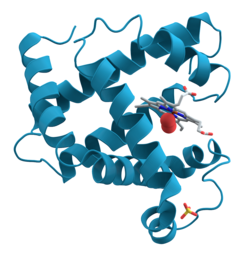
Myoglobin is a heme-binding molecule present in skeletal and cardiac muscle. It makes our muscles red, especially the slow-twitch (Type I) muscles. It is similar to hemoglobin but greedier -- it's affinity for oxygen is much stronger.  Underwater mammals like seals and whales are able to hold their breath much longer than us due to their higher concentration of myoglobin in muscle.

For reasons that are not entirely clear to us, when muscle tissue breaks down from trauma and immobility, myoglobin is released into the bloodstream and subsequently filtered by the kidneys where it can cause major damage -- nephrotoxicity by iron-dependent and -independent mechanisms.
1) Ferrous oxide (Fe2+) is oxidized into Ferric oxide (Fe3+) and leads to free radical damage in the kidneys.
2) Tubule obstruction and direct toxic effects are thought to occur as well.

Aggressive saline infusions with possible addition of sodium bicarbonate to alkalinize the urine (and prevent conversion of myoglobin into its more toxic metabolites) are the sole treatment of this kidney condition.  This makes sense, since you're clogging up the filtration system with this muscular gunk, you vigorously flush the whole system out!

We're talking about boluses of 20cc/kg (or ~1.5 L of NS for the typical person) initially, with maintenance IVF of 200-300cc/hr thereafter!

This is expected to go on until the urine output hits 2-3cc/kg/hr (or 150-200cc/hr for the typical person) and the urine clears up.


Hopefully you find this topical and interesting as well.


References

Photo by simminch via flickr

BurnDoc ICU Rounds:
-Traumatic rhabdomyolysis/Crush Syndrome
-Acute Renal Failure

Myoglobinuria - Medscape