September 25, 2009

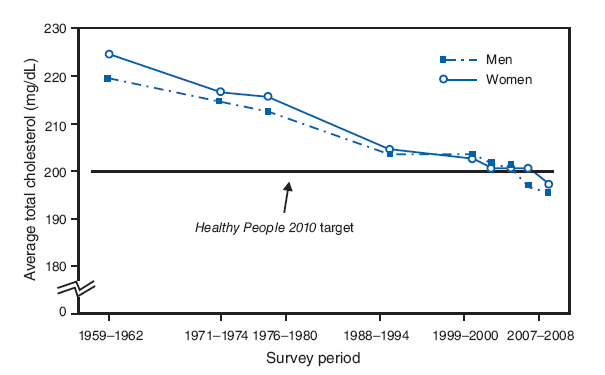
Cholesterol trends down


Some good news in the world... people are eating healthier and exercising more. Or they are taking more statin medications.

MMWR Weekly:

QuickStats: Average Total Cholesterol Level Among Men and Women Aged 20--74 Years --- National Health and Nutrition Examination Survey, United States, 1959--1962 to 2007--2008*

September 02, 2009

Pong's Postulates (II)

Pong's Postulates
1) Health is something we have until we notice we do not.
* Preventive services help people notice their health.
2) There are two types of disease: those we live with and those we do not.
3) "Docere" in latin means "to teach." Doctors primarily help people know their illnesses.

* It does not matter what doctors say; what matters is what patients hear.
4) Comprehensive Generalists see the big picture.
* Interventions happen all they way along the natural history of health to disease to complications.
5) I want to be a part of my patients' long lives through sickness AND health acting as their advocate and guide.
Therefore, I want to be a Primary Care Family Physician.


Elucidating Pong's Postulates

Health and illness:

One of my early experiences with disease is unusual. It was nothing more than a nuisance at worst but it affected me greatly. I have a condition called hyperhidrosis, characterized by excessive sweating. As a child, my palms would literally drip with sweat, sometimes for hours. I went to a dermatologist and after failed trials of topical antiperspirant and uncomfortable iontophoresis, I considered Botox or surgery. So in the midst of applying for medical school, I had a bilateral thoracic sympathectomy performed. Now I can take notes, read books and put on gloves without a struggle. I reflect upon it every time I greet a patient, now that I can shake their hands without hesitation. I am thankful for the help of my dermatologist and the skills of my cardiothoracic surgeon who have boosted my confidence as a physician.

Disease and dealing with it:

In the summer following my first year of medical school, I shadowed a few doctors at a clinic for the underserved. One patient in particular stands out in my mind. She was an obese Micronesian woman who came in with her teenage daughter complaining of fatigue, thirst and frequent urination. The resident made the diagnosis of diabetes. The plan seemed simple enough: diet, exercise and metformin. I was impressed with the way that the resident delivered the information but I noticed that she stopped listening. She broke down and started to cry. Her sobbing grew even louder as the resident started to raise his voice -- as if it would help her hear what he had to say!

"I'm sorry," I said as I handed her a tissue. "I know this is all coming as a shock to you..." I struggled with what to say next. "Are you afraid you'll be like your father and need an amputation?" Suddenly being diagnosed with the same disease that almost killed her diabetic father was too much for her. The resident apologized; "I'm sorry. Sometimes I forget that this is not as routine for you as it is for me." I have never forgotten those words -- it does not matter what doctors say; what matters is what patients hear. What can be a straightforward routine for physicians is often a life-altering alien experience for patients.

We comforted her. Diabetes was something that she could learn to live with instead of dying from it. "You need to lose weight. I do not want to say 'go on a diet.'" I said at the end of the visit. "That is temporary. We really ought to work on lifestyle changes for you AND your family... you do not want your daughter to follow in your footsteps, do you?" Both of their eyes welled with tears at that and they silently shook their heads. I was gratified to see that her daughter's half-full soda was swiftly discarded as they left the exam room.

The Big Picture and Interventions:


In my first elective as a fourth year clerk, I rounded with a cardiologist covering his partners' patients in the hospital. One of the patients we met was an elderly Hawaiian man with forty grandchildren who clotted off his stent. Three weeks ago, he was told very emphatically to gather up his family and say goodbye. Three weeks later, we found ourselves face to face with a restless grandfather. "I don't want to die here in the hospital." It was a sentiment I could understand except he had a surprising recovery. The cardiologist tried to negotiate with him to stay to make sure he was stable on the correct medications. "You may die if you leave the hospital. Do you understand?" The patient frowned and replied "Do you have grandchildren? Do YOU understand?" "No. But I understand. Do YOU?" It went back and forth until the cardiologist left abruptly.

I could see them slicing past each other trying to press their points. No doctor had given him the simple courtesy of three minutes of time in the past three weeks. He was frustrated and confused. At first, he was told that he was going to die in the hospital, then he could go home for hospice and now he was supposed to stay. I do not have any grandchildren, so I could not understand how he felt. This man cared more about his family than his own health. Perhaps it was a pervasive trend; there were many interventions that could have guided him down a different path. Yet here we were with only one thing to do: I just listened to him.

I want to be a Primary Care Family Physician:

I often wonder how the story ends for these patients. I wish I could be a guide for the mother and her daughter through health and an advocate to fight for the grandfather. I know that this is precisely what I will get to do as a family physician.

My doctors helped me prepare my HANDS for medicine. My teachers in medical school helped me prepare my HEAD as well, but it is my patients that have prepared my HEART for a lifelong commitment to medicine.

August 28, 2009

DeGowin Quotable.

DeGowin's Diagnostic Examination seemed like a silly book to have, but I inherited it from one of my previous upper medical student benefactors. I had already read through Bates... what more could it offer?!?

Boy, was I wrong.

I bought the book for my Kindle and I have enjoyed reading it from time to time. It goes beyond talking about history taking and physical exam maneuvers to philosophy.

Here's my favorite quote:
DeGowin's Diagnostic Exam (Richard F. LeBlond, Donald D. Brown and Richard L. DeGowin)
- Highlight Loc. 898-901 | Added on Saturday, July 25, 2009, 11:17 PM

Disease is a four-dimensional story, which follows the biologic imperatives of its particular pathophysiology in specific anatomic sites as influenced by the unique characteristics of this patient. Your task is not verbal, but cinematic; construct a pathophysiologic and anatomic movie of the onset and progression of the illness: the words are generated from the images, not the images from the words. After all, a picture is worth a thousand words.
Indeed, I remember my patient's problems better and I learn better when I visualize things instead of simply trying to MEMORIZE. It is tough to stay on task with it, but it is very effective during presentations -- when I've got things straight, the story comes out the right way.

August 25, 2009

A Picture is worth 1000 words... but


It's been said that a picture is worth a thousand words.

And sometimes two words aren't worth telling based on a picture.

Thanks a bunch, Palin.

Dr. Rich fights back in the Covert Rationing Blog.
When Sarah Palin uttered the fateful words, “Death Panels,” she unleashed the holy wrath of the great unwashed masses, and as a result caused many of our more complacent legislators to abruptly bestir themselves into a higher state of arousal, if not outright agitation. Palin’s accusation caught more than a few of them utterly unawares, and embarassingly flatfooted.

They felt, no doubt, like they were in that dream where you unaccountably find yourself naked in a crowd. But this time, rather than reaching to hide their sadly exposed nether parts, they reached instead for their pristine copies of HR 3200. One could almost pity them, desperately rifling through the 1100 virgin pages, wondering whether perhaps they should have tried to read that monstrosity earlier after all, and muttering to themselves, “Death panels? This damned thing has death panels?”

August 22, 2009

PERC up about Well's for PE

PERC up about Well's for PE
mnemonic for workup of Pulmonary Embolism
Items in italics and bold refer to unique features of the PERC score and Well's Criteria.

PERC Score: (PERCx2)
PaO2 <92%
Pulse >100
Extremity swollen now (DVT)
Elderly >50
Recent surgery
Recent DVT -- unilateral extremity swelling in past
Contraceptive use
Coughing up blood


Medscape: Differentiating Low-Risk and No-Risk PE Patients: The PERC Score
http://www.medscape.com/viewarticle/702755

Well's criteria: S.S. PERCC
Suspicious for PE (3)
Signs of DVT now (3)
Pulse >100 (1.5)
Extremity: Past DVT/PE (1.5)
Recent surgery/immob (<4wk/>3d respectively) (1.5)
Coughing up blood (1)
Cancer (1)

High >6.0 pt
Moderate 2.0 to 6.0 pt
Low <2.0 pt


Wells PS, Ginsberg JS, Anderson DR, et al. Use of a clinical model for safe management of patients with suspected pulmonary embolism. Ann Intern Med 1998;129:997-1005. Study used a "minimally invasive" approach to managing patients with suspected PE, emphasizing use of serial dopplers rather than PA grams in patients with a non-diagnostic initial work-up. Approach is comparable to the 1999 ATS guidelines; it does not include CT angiography. A particular strength of the study was the use of set criteria to establish clinical suspicion. http://www.ncbi.nlm.nih.gov/entrez/query.fcgi?cmd=Retrieve&db=pubmed&dopt=Abstract&list_uids=9867786

August 21, 2009

Healthcare Reform 3200 Bill: 425-430 (Section 1233)

At a wedding recently, my aunty came up to me and asked "so what do you think of the healthcare bill?" I jokingly said "well, I read all thousand pages and... hehe. I don't know." I rely on the news like everyone else and I hear about "death panels" and "physician reimbursement for needed services." The Daily Show had a great interview elucidating some of the key parts of the controversy.

The Daily Show With Jon StewartMon - Thurs 11p / 10c
Exclusive - Betsy McCaughey Extended Interview Pt. 1
www.thedailyshow.com
Daily Show
Full Episodes
Political HumorHealthcare Protests

The Daily Show With Jon StewartMon - Thurs 11p / 10c
Exclusive - Betsy McCaughey Extended Interview Pt. 2
www.thedailyshow.com
Daily Show
Full Episodes
Political HumorHealthcare Protests

Betsy McCaughey is the writer of the controversial article: Ruin Your Health With the Obama Stimulus Plan on Bloomberg.com.

I do not know how I feel about this. The text of the bill says that it will provide payment for engaging in a discussion about end-of-life care every five years, otherwise the physician will be penalized.

That sounds good to me... carrot on one end (you get paid for something you should be doing) and stick for the other end (you get punished for neglecting to do it often enough.) That does not make it mandatory, nor does it force patients to choose DNR. I find those words despicable when I step away from the mantle of medicine... it strikes me as WRONG to label someone as "not worthy of resuscitation" when we mean to "allow their natural death" which is why I have posted previously on my thoughts in DNR does not = Do Nothing.

At the same time, it sounds really bad the way that some phrase it. McCaughey thinks the worst of the government as it quests for heartless objective quality improvement at monetary gain, which will drive elderly off the cliff to their doom! The fact that there are people who even perceive/misconceive/misinterpret this measure says something about the wording.

It should be revised and it will probably end up being dropped altogether.

That's sad because it is a great idea to give an incentive to initiate this tough discussion between people and their doctors.

Rob at Musings of a Distractible Mind puts it best in his post: Dying Patients and Ugly Politics. He talks about a discussion he has had with one of his patients with advanced dementia.
Politicians have labelled this merciful conversation as an act of rationing. That is not only ignorant, it is shameful. Talking to people about end-of-life issues will certainly save money. But it’s a contemptible step to imply that this money is saved by killing the elderly. It’s more wrong to make money off of keeping them alive unnecessarily than it is to save money by letting them die when they choose.

This is politics at its ugliest – taking a provision that will reduce suffering and help people and pervert it to be used as a tool to scare the people it will help. The discussion about healthcare has been subverted by those who want poll numbers.

Shame on you.

Psych Drugs as Venn Diagram


source: Information is Beautiful

David McCandless, a "visual and data journalist" should team up with Hans Rosling to get the public excited about Statistics that Matter.

Some of their displays about the influenza outbreak and country wealth are truly inspiring to see... it really shows how a good presentation makes all the difference in conveying understanding about an issue of numbers.

August 19, 2009

PubMed searches become easier


PubMed, I'm still waiting for the day when I can copy and paste a reference into the search field and get a single citation match! I find it absolutely frustrating that when I already KNOW the author, journal article and even the title of the article... the search bar is often unreliable and refuses to post the link when I type in NEJM instead of New England Journal of Medicine.

August 11, 2009

Red pill vs Blue pill


One of my friends sent me this article from the Economist: Friends for Life - Big Drug Firms Embrace Generics
"If there’s a blue pill and a red pill, and the blue pill is half the price of the red pill and works just as well, why not pay half the price for the thing that’s going to make you well?" Thus Barack Obama captured one of two powerful global trends forcing pharmaceutical giants to look for a new business model.
The new model that they refer to incorporates smaller generic-drug producers into larger drug-name companies. Basically, providing "responsible" oversight in exchange for name-brand recognition with the original patent holder/drug producers.

My personal opinion is that drug companies should not be "for-profit" entities. Otherwise they put the company ahead of patient interests and defy responsible and ethical regulations. That's my Hippocratic bias and I guess stockholders should get some benefit of the doubt and perhaps they invest in drug companies for nobler reasons than "oooh, they've got a new great drug on the market for the next ten years that will rake in profits and give me a 7% return on my investment!" :-\

Pharm company takeovers of smaller generic producers is a good trend in my opinion! The thought of my local drug store buying generic drugs that turn out to be contaminated with lead or nephrotoxic chemicals terrifies me. It's been done with toys and dog food in China which has shown itself to be notoriously unreliable in its oversight relative to its ability to provide cheap labor and products.

It's funny that the drug companies are going to be providing oversight for these small generics companies (basically providing them with a reliable name) so they can continue making money. The next inevitable step will be in aggressive, large-multicenter, multinational studies in comparative-effectivness research that demonstrates benefits of certain drugs WITHIN a drug class that will provide them with future guaranteed profits if they happen to be the reliable producer of the best-name drug.

As a future physician, I will always choose "Obama's Blue Pill option." It is the obvious choice in his scenario... it's cheaper and just as good! Of course, Neo is seen reaching for the Red pill, so he's off to a harsher reality. So too with us, most likely.

August 06, 2009

Pong's Postulates (I)

In the movie Pi, by Darren Aronofsky, a paranoid mathematic genius recites a near daily mantra:
Restate my assumptions:
One: Mathematics is the language of nature.
Two: Everything around us can be represented and understood through numbers.
Three: If you graph the numbers of any system, patterns emerge.
Therefore, there are patterns everywhere in nature.
Evidence: The cycling of disease epidemics;the wax and wane of caribou populations; sun spot cycles; the rise and fall of the Nile.

So, what about the stock market? The universe of numbers that represents the global economy. Millions of hands at work, billions of minds. A vast network, screaming with life. An organism. A natural organism. My hypothesis: Within the stock market, there is a pattern as well... Right in front of me... hiding behind the numbers. Always has been.
I found it to be an excellent, albeit strangely rigid way of honing in on a mission statement so to speak for this character. He proceeds from an axiom: math = nature, follows a logical set of basic principles and subsequently derives a set of values and his motivation for his current project. A way to predict the numbers in the stock market.

--------------------------

I would like to derive my own set of postulates.
A mantra that I can repeat to myself on a daily basis to remind myself of what keeps me going. My personal mission statement, if you will. The abstract version at least. If all goes well as I review my entire medically related personal history in preparation for the all-encompassing personal statement... I'll discuss each section in turn over the next week.

Pong's Postulates.
1) Health
Health is something we have until we notice that we don't. (or is it "aren't"?)
2) Illness
There's two types of illness: those we live with and those we don't.
3) Physicians
Doctors help people notice their diseases.
4) Primary Care/Prevention, Family Physicians
Primary Care helps people notice their health. Some doctors value long-lasting relationships with all sorts of patients, treating them as a part of a family-unit striving for health.
5) My Role. My Choice. My Calling.
My observational and problem-solving skills qualify me to be a great clinician, since you only see what you notice and what you notice is what you know.
My passion for science, my love of learning and my joy for sharing knowledge qualifies me to be an excellent educator in disease and prevention.
My strong sense of duty to help those in need, my commitment and my desire to make a difference in the lives of those I work with qualifies me to do hard work for the underserved and push for changes where they are needed most.

Therefore, I want to be a Family Physician -- an advocate, a coach, a guide, a mentor, a healer. It's almost like being married -- I want to be a part of my patients' long lives, through sickness and health.

August 02, 2009

Patient Centered Medical Home... say what?

One of the key components driving our healthcare debate centers on something called the "Patient Centered Medical Home." In a simplified, beautiful poetic statement it is:
"A continuous relationship with a personal physician coordinating care for both wellness and illness."


At the recent AAFP FM NC (American Academy of Family Physician's National Conference) for Residents and Students that I attended... the speaker Dr. McGeeney said:
People get the concept. People like the idea. It's the NAME that they hate.


I will freely admit, it sounded like just another silly buzzword that's thrown around to me. I do readily subscribe to the concept of a medical home -- and I do want to put my patients first in all respects. These are things that I got excited about planning for my future practice without even realizing what a PCMH is!

One of the commenters at the end of Dr. McGeeney's talk summed up my own sentiments quite nicely. He raised his hand and said "it sounds great and all, but you REALLY have to change the name. No one knows what that means. I get that it's an old concept from 1967, but it needs to change. It sounds like a nursing home to me."

So, I found myself thinking about the CONCEPT.

What does it mean to have a PCMH?
To me, it means having a doctor for life. Someone you can trust. Someone who has known you through thick and thin.
It means having a group of people who work with you. Dietician, exercise trainer, medication manager, physical therapy, diabetes educator, etc... "ancillary services" that deserve a central role in care.

Why don't people get it?
I think Home is a solid object in a lot of people's minds. When you tell them "we are going to give you a medical home" they think of a location, rather than a group of awesome people who are trying to keep them healthy! A funny story is that one of the family medicine residency programs got a phone call from a reporter, asking to see their new medical home. "So, this home. Is it a house? A clinic? What sort of structure is it?" After some forehead slapping in trying to explain that it was just a concept, the director ended up just telling him their address. UGH. PCMH really doesn't lend itself well to a clear definition.

So what's your brilliant solution?!?
I am very biased on this point. I'll say it up front because it is a shameless plug for my specialty of choice.
I propose that we call it Patient-Centered Medical Family.

Think about it.

July 15, 2009

Doctors are Gamblers


Doctors are Gamblers.

One of the questions in surveys that determine what sort of career in medicine you want asks:
How much ambiguity can you tolerate?
read: How much are you willing NOT to know? The answer is surprisingly telling.

I thought that as a physician in training, I would learn how to become more confident in my diagnosis when in practice, this is a very difficult thing to achieve. Especially in a brief visit where there are no clear labs or studies to elucidate the answer. Take a simple cold. A patient comes in with a sniffly nose, fatigue and a sore throat and asks: do I have strep? You can do a throat culture, but that will take time. You can do a rapid strep antigen test, but the test is not sensitive and you may get a false negative. Even for the most common conditions, there is a great deal about which we DO NOT know, nor can we ever know. We don't even have the tools to test for a lot of the different viruses that may cause a common cold... and why bother? It'll go away on its own with some fluids and rest.

Take another common concern: Doc, what are my chances of getting a heart attack?
We gamble on answers like this when we prescribe medications to reduce risk factors for coronary artery disease like high cholesterol (diet, exercise and statins,) and diabetes (diet, exercise, and metformin.) We risk stratify patients based on a collection of factors that have been shown to lead to increased risk of a heart attack in the future. The biggest study of this is the Framingham Heart Study. From a collection of statistics gathered from anamnesis (patient history) and labs, we can determine the 10 year risk of a patient for having a heart attack!

That's pretty powerful. But it is still just a Chance.
And how often do you really have a discussion like THIS with your doctor?!?
You're a 57 year old male. Your total cholesterol is 275. That's high because it's bigger than 200. Your HDL(good) cholesterol is only 35. That's low because it's less than 40. On top of that, you're still smoking and your systolic blood pressure(big number) is 150 despite being on medications!

You know, that means you have a greater than 30% chance of getting a heart attack or something similar in the next ten years. Think about that.

If you quit smoking and exercised to bring your blood pressure down to normal (120,) you could pull your risk down to 18%. That's still high but if we put you on a medication to lower your cholesterol and it was brought down to a normal level, we'd bring it down to 12%!

We can cut your risk in half with some simple changes. What do you think about that?


We gamble with people's lives. Some people live gluttonous self-indulged lifestyles and never have any health problems. Other people are health nuts but suffer from multiple ailments.

We don't know what hand people are dealt... but we can help stack the deck in their favor.

July 10, 2009

Rights vs Expectations

Even though I disagree with a lot of what Happy Hospitalist writes when he waxes political, I find myself drawn to his blog. Perhaps it gives me something to react against. In any case, he wrote the following short bit yesterday:
Does America Have A Right To BASIC Health Care?

I hear it everyday. Affordable access to basic health care should be a right.

Could someone please define to me what constitutes basic in the basic health care arguement? I want to hear examples of what is basic health care and what would not be considered basic and why you have a right to one and not the other.

Why should we have a right to health care but not health? Should we not have a right to stay healthy? Should we not have a right to free gym memberships? How about a right to free vegetables. If you have a right to basic health care, we should also have a right to services that prevent the break down of health as well.

Right?

My response in the comments section:
There are a lot of things we take for granted -- clean water, sewage treatment, uncontaminated needles for IVs and sterilization procedures before surgery.

These are PUBLIC HEALTH measures that have greatly affected our quality of life. So much so that their effects are practically invisible.

When we say "basic," I think of something along the lines of "do or die." There are a lot of things that factor into this... obviously someone with untreated hypercholesterolemia and diabetes for 40 years who comes in with a heart attack could have received appropriate intervention before this life threatening event.

The question is this: What OUGHT to be covered?
Primary prevention: healthy living (free gym memberships, shelter, access to fruits and veggies)
Secondary prevention: screening for CAD risk factors (checking lipid panel per ATPIII recommendations or just total cholesterol per USPSTF.)
Tertiary prevention: intervening after disease is detected to prevent complications (starting off treatment with statins and metformin.)

A lot of people would argue that it is fully within the scope of medicine to intervene with Secondary and Tertiary preventive measures (which SHOULD be covered as basic health care to some degree.)

Primary prevention... like the rest of PUBLIC HEALTH falls more under the scope of the government in my opinion, not accounting for the occasional harassment by a PCP to "eat right and exercise." As needed, I'm sure there are a number of excellent docs who can go more in depth into personalized primary preventive measures but when this is not reimbursed... not many will opt to do it with all their patients!
This made me realize that the Rights argument is very progressive (in more ways than one.) We all expect some certain unalienable rights to Life, Liberty and the Pursuit of Happiness.

What does it mean to have a "right to Life"? This draws an issue like abortion (ugh! let's keep that at least 10 feet away for now) to the forefront when really, there is a much more fundamental right that this draws upon... one that I have not seen clearly defined or reflected upon. Is it a right to a healthy life? A right to live?

I think it is a Right to Live as others live. There is an element of Expectation to this as well. We expect that we can all live equally in a democratic society.

Access to healthcare is becoming more of an issue than our forefathers expected because our medical knowledge and power to intervene has increased dramatically. This has created new power relationships and health deficits in socioeconomic status that cross generations! It goes beyond doctors and hospitals. That's why the government must play a role "to Secure these Rights," "deriving their just Powers from the Consent of the Governed."

I expect this from my government. A lot of people are afraid that the government will mess this up and want it to stay out of the Healthcare debate as much as possible. This is not a dig, but merely an innocent question: Republicans/conservatives in congress, if you distrust government so much and are afraid of its collective incompetence, why are you in office? I would much prefer it if you created some solutions rather than saying "the best thing we can do is to stay out of it."

July 08, 2009

Atrial Fibrillation Treatments

Atrial fibrillation involves the two top small chambers of the heart. They quiver instead of coordinating a strong beat which makes patients with a fib often feel palpitations with an irregularly irregular heart beat.

Last year I had a patient with atrial fibrillation. She was hospitalized for a splenic infarct after discontinuing her warfarin because she found out she was pregnant. Luckily for her, it was only her spleen that got hit and she agreed to go back on the warfarin after an elective ITOP -- things did not work out as planned with her ex-boyfriend apparently. My chief resident had me read about the ground-breaking AFFIRM study, which showed that rate control was equivalent to rhythm control, with less drug side effects since antiarrhythmics can induce arrhythmias (go figure.)

This week I started my cardiology rotation with a day FULL of patients with atrial fibrillation -- some newly diagnosed, some medication induced, some status post valvular repair! It was as if the medical gods convened to help me learn something new.

My cardiologist encouraged me to read further on this subject so I found two other trials: ACTIVE-A and ACTIVE-W. I performed a Critically Appraised Topic (CAT) review on these different treatment options for anticoagulation in a-fib.


After presenting the results to my preceptor, he asked me about mortality data. Unfortunately, I didn't look into that as closely as it was a small part of the primary end points (stroke, MI, non-cerebrovascular embolic events and vascular death.)

Enough about medical interventions.
Here's an excellent video on one of the surgical procedures for removing the ectopic foci in the pulmonary sleeves. I didn't know it was so involved with the computerized models using US and CT to create a digital image of the heart!
Atrial Fibrillation Ablation (Our Lady of the Lake Regional Medical Center, Baton Rouge, LA, 2/11/2009) - MedlinePlus: Videos of Surgical Procedures

June 11, 2009

Metoclopramide for Hyperemesis Gravidarum

Hyperemesis gravidarum is a fancy way of saying really really bad "morning sickness," severe nausea and vomiting associated with pregnancy.

There have not a lot of drug options here in the U.S., ever since thalidomide was shown to cause severe birth defects - phocomelia, where the children have shortened "flipper" like limbs. As you might imagine, pregnant women are very hesitant to participate in drug trials. It is just as hard to get children enrolled in studies. Unfortunately, the fundamental goal of trying to protect infants and children gets warped from lack of knowledge... and we know very little about how to medicate lil kiddos!

NYT Health says that Metoclopramide is safe for pregnancy. Reglan, as it is more commonly known, is a common anti-nausea medication has been shown to be safe in over 80,000 births in southern Israel.
“Our study [The Safety of Metoclopramide Use in the First Trimester of Pregnancy] is about 10 times larger than all of the other studies of this drug put together,” said Dr. Rafael Gorodischer, one of the study’s authors and a professor emeritus of pediatrics at Ben-Gurion University in Israel. “We studied exposure in the first trimester because that is the most critical period for the development of the fetus, when most malformations would be caused by an external cause.”

“We can now say with a high degree of confidence that it’s a safe medication,” he said.

On the heels of this announcement, the British Medical Journal published their ClinicalEvidence on Nausea and Vomiting in Early Pregnancy (updated June 3rd 2009.)
Metoclopramide for treating hyperemesis gravidarum: One RCT found that metoclopramide was less effective at reducing vomiting episodes and readmission to the intensive care unit compared with corticosteroids. Other drugs and interventions may be more useful. Categorised as Unlikely to be beneficial.
Hm... so what does this mean? There is proven safety, but no clinical efficacy in severe cases. Clinical trials will need to be performed to look at this further. And thanks to this new study, we can! :)

June 09, 2009

Culture of Medicine II

The saga continues.

President Obama made some comments in the news regarding McAllen, Texas, suggesting that he read Dr. Atul Gawande's article on "the Cost Conundrum." Indeed, a recent New York Times article "Health Care Disparities Stirs a Fight" confirms this:
The [Gawande] article became required reading in the White House, with Mr. Obama even citing it at a meeting last week with two dozen Democratic senators.

“He came into the meeting with that article having affected his thinking dramatically,” said Senator Ron Wyden, Democrat of Oregon. “He, in effect, took that article and put it in front of a big group of senators and said, ‘This is what we’ve got to fix.’ ”
There's a fundamental difference in approaches between politicians and doctors. Docs are taught to care for every patient as if they were a member of our own family. Perhaps healthcare spending reflects this attitude. Politicians often abuse their constituents as if they are unwanted members of family. Perhaps they are willing to sacrifice X number of lives to save Y number of dollars in an annual budget. I say this only half-jokingly; it is a political necessity to be separated from the issues since there will always be a passionate dissenting group that protests any sort of stand they make. The difficulty, in politics as well as medicine, lies in controlling our emotions so they do not rule our intellect.


But how do you resolve the most personal and emotional issue of all?
I agree with Obama's eloquent response to the question: "Is healthcare a privilege, right or responsibility?":
I think it should be a right for every American. … for my mother to die of cancer at the age of 53 and have to spend the last months of her life in the hospital room arguing with insurance companies because they’re saying that this may be a pre-existing condition and they don’t have to pay her treatment, there’s something fundamentally wrong about that.

What price do you put on the health and welfare of your family? The New York article mentions data that provides EXACTLY what sort of numbers the government has been willing to spend on each person in 2006:
Nationally, according to the Dartmouth Atlas of Health Care, Medicare spent an average of $8,304 per beneficiary in 2006. Among states, New York was tops, at $9,564, and Hawaii was lowest, at $5,311.

Researchers at Dartmouth Medical School have also found wide variations within states and among cities. Medicare spent $16,351 per beneficiary in Miami in 2006, almost twice the average of $8,331 in San Francisco, they said.
Wow! Hawaii? I wonder if the fact that we also have mandatory healthcare (Pre-Paid Health Care Act of 1974) for full-time workers (>20 hours per week) in the nation has anything to do with these statistics. Massachussetts has a cool system too. Unfortunately, I don't know how well it is working out for them with the confluence of crises.

While it might sound appealing to adapt practices Aloha-style... that really would be doing things just for the love of it. A lot of doctors in Hawaii (regardless if they were Hawaiian doctors or not) are retiring, leaving the state or cutting back on their practice because of low reimbursements for Medicaid/QUEST and Medicare patients. So on the surface, it sounds appealing from a political point of view to slash wasteful spending but this can run antithetical to the goal of improving primary care by chasing doctors away.

Another thing that clogs up the gears of the glimmer of hope for Hawaii's healthcare... recently, the Medicaid/QUEST contract has gone out by two Mainland firms: UnitedHealth Group Inc. and WellCare Health Plans Inc. These companies were under investigation in billing fraud and improper claims scandals. Also, there is concern that the 37,000 enrolled aged, blind and disabled patients may have to change providers and lose continuity of care. Waianae and Waimanalo, the two regions on Oahu with the most Native-Hawaiians ironically are the two areas where the Community Health centers have opted out. (citation DENIED, see below)

I hope that the nation does not look at Hawaii for all the answers. It's much more likely that our docs have just gone uncompensated for a lot longer.

(Disclaimer: My commentary comes from the point of view of a medical student trying to stay informed on health-related news while studying to become a doctor in these changing times. As such, notmysecondopinions are not the best source around on health policy! I wish I could provide better local references... unfortunately the archives for the Honolulu Advertiser are on a pay-per-article access of $2-3! That model is detrimental to quick online Google News Searches for proper content.... gr.)

June 08, 2009

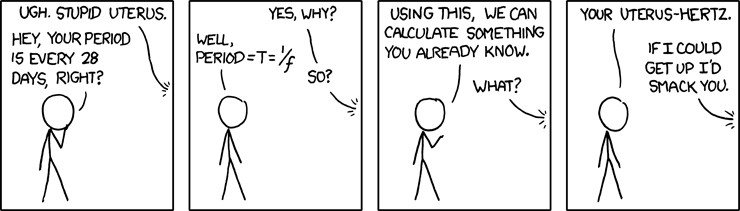
When Physics meets Physician.

With our powers combined...
I am Captain GEEKITUDE!


the image properties for this comic reveals the answer:
413 nanohertz, by the way.
:)

June 07, 2009

Culture of Medicine

“So, what brings you in today?”

The young Filipino lady before me wrung her thin hands together. Her eyes betrayed a sense of fatigue as the corners of her eyes crinkled with anxiety. “Doctor, I am still feeling dizzy.”

Dizziness is a common complaint, but a difficult one to get a handle on. So many different things manifest themselves as dizziness… an unsteadiness with walking, the presyncopal feeling like you are going to pass out or just the sensation of violent spinning (the same as how you felt as a child after twirling in circles in the park or on an office chair). “What do you mean?”

“Well, it started almost two months ago. I had two episodes of dizziness that went on throughout the day that lasted for a few seconds. It felt like I was spinning in a circle. I was worried so I went online to see what could cause it. And I tried to make an appointment with my family physician but that would be in a few weeks so I saw an audiologist, a neurologist and a psychiatrist too. The audiologist tested me for nystagmus and had me perform the Dix-Hallpike maneuvers and asked me if I was dizzy. I told her no, but she noted some eye movements with the electronystagmogram so she diagnosed me with bilateral benign paroxysmal positional vertigo anyway. She prescribed some modified Epley maneuvers. The neurologist thought I might have migraine-related vertigo and put me on Amitryptyline. And this whole time I was doing research online I would read about these different symptoms and I would start to get them! My parents were very worried and suggested that I see a psychiatrist for my anxiety. He put me on Sertraline and Clonazepam.

Wow… I thought to myself. That’s quite a few specialists! This was a highly educated woman… she understood what nystagmus and Epley maneuvers were, and she could pronounce BPPV which put her pretty much at my level as far as I was concerned. Yet after seeing all of these different doctors, she was still here in the FM clinic even though her last visit was *flips through the chart* two weeks ago… when she was given meclizine for nausea.

“Uhm, I’m sorry…” I apologized. “I don’t understand. You’ve been diagnosed with BPPV and anxiety with the possibility of migraine-related vertigo… what can I do for you today?”

“I just want help. I am not feeling the spinning dizziness anymore. That was a long time ago. Now it is more of a… it’s hard to describe. It’s a rocking sensation.” “Like you’re on a boat?” I offered. “Sort of.”

It took me a while to piece the whole story together, but it seemed like her main complaint of dizziness had resolved but she was having residual anxiety and a number of other unusual symptoms -- getting visually overwhelmed by venetian blinds and patterns on carpets and being unable to go into a store without feeling anxious. However, she persisted on calling it dizziness with her subsequent physicians, although perhaps “uneasiness” would be a better way to put it. She told me that when she saw the audiologist and the neurologist, she was feeling very anxious about what was going on… but aside from performing tests like an ENG and an MRI of her head, they offered little comfort or support except to say “Go see your family physician.” She saw the psychiatrist about a week ago and after some persistent questioning about functioning, she said that she felt much better with the SSRI and benzodiazepine.

While I do not doubt the technical ability of the audiologist to interpret an ENG or a neurologist’s ability to identify and treat a migraine headache, these skills have their time and place. Her underlying problem was the anxiety she was having about the dizziness which took over and became a general sense of worry and unease. These specialists were ill-equipped to deal with that aspect -- and it was not until the Family Medicine doctor intervened that the whole picture could be assembled for the patient.


“You’ve seen a number of specialists and they have helped us rule out dangerous things like a brain tumor. You are still able to work and you have not had any difficulty walking, so functionally you’re doing really well. I understand that you’re feeling dizzy. The good news is that it is nothing serious as far as we can tell so far!” She left feeling reassured and I saw her with the psychiatrist as well to keep up the continuity of care.


The culture of medicine has changed and I feel that this is the crux of it! This patient had fallen through the cracks of the system. She tried to get an appointment with her PCP and when she couldn’t see her immediately, she resorted to a series of more expensive but ultimately unfulfilling specialists before her family helped her find someone address the underlying problem. She needed someone to put the pieces of the puzzle together. All too often, patients think that specialists are better than primary care for everything and this fragmentation of care leaves the patients with the pieces. Even worse, they assume that their primary care physician is automatically receiving all of these specialist reports! It is hard to piece all of these things together from a confused patient. I think that family medicine physicians are more than care coordinators or a bouncer at the specialty doorway. Similarly, specialists are more than just procedural technicians who punt back even small things like reassurance and education back to a family physician. All doctors go to medical school instead of OR or ER or psych ward school for a reason. We all know the basics of patient care.

A recent New Yorker article by Atul Gawande, entitled the “Cost Conundrum” also addresses this “Culture of Medicine.” Gawande outlines the problem of controlling health care costs by comparing the habits of physicians living in McAllen, Texas to nearby El Paso, Texas. He also went to Mayo clinic in Rochester, Minnesota, where he expected that their world-wide renown, high-tech and high quality of care would equate to more money.
McAllen’s Medicare expenditures per enrollee in 2006 were $15,000.
El Paso’s were $7,500.
Mayo clinic's were $6,688, less than either McAllen or El Paso!
What accounted for this difference?

McAllen physicians were highly enterprising and saw more patients each day, ordered more tests, and performed more aggressive interventions earlier. This padded their pockets a little bit more and thus rewarded, they continued onwards. This cycle of greed and profit is perfectly legitimate in our system of Relative Value Units (RVUs) where procedures are valued above cognition and doctors are compensated not be the quality of their patients’ health or their ability to make a diagnosis in a cost-effective manner… they are paid based on how many patients they see each day. This drives them to maximize their patient numbers and minimize their time with each of them! It becomes much easier to check a box and order an MRI of the brain than it is to spend an extra TEN minutes with a patient to sort out the true history and duration of dizziness -- but which one is more ideal?

I think that healthcare will be the next bubble to burst, now that dot.coms, real-estate markets, Wall Street and Auto makers collapsed under similarly empty value-for-cost pressures. Our healthcare dollars are being poured down a hole with little regard about whether they are spent on the RIGHT things. Gawande made a comment that I found Twitter-worthy:
“the most expensive equipment is a doctor’s pen. And, as a rule, hospital executives don’t own the pen caps. Doctors do.”
The culture of medicine needs to change if we are going to fix our “broken system." Doctors cannot sit idly by and complain that it is insurance reimbursement or Medicare that is causing the problem. We need to admit that we are a part of the problem -- and seeing patients as a revenue stream and maximizing “business” by turning up the speed on the conveyor belt is not the solution! There is a sense of entitlement that because we have worked so hard and studied for so long to get to the position that we are in today (or in my case, soon will be,) we deserve the highest compensation for our services as possible. We measure our success based on how our income and lifestyle compares to our peers -- and so, in medical school, ironically fields like anesthesiology and radiology are highly valued despite the minimal patient contact. (It's a a pissing contest, if you pardon my French.) Our value to society and our true measure of success should be based on how healthy we keep our patients and how comfortable we make them feel when we cannot. That's our value to keep healthcare costs down!

We do not gain the sympathy of the general public by complaining -- “I don’t get paid enough to see patients!” Many patients who go to the doctors only to find a nurse practitioner or a physician assistant may just reply -- “You never saw me anyway.” We need to ground ourselves again and remember that our duty is to Care for patients before ourselves. That’s my interpretation of the words “Primary Care.” And that’s Not My Second Opinion!

June 04, 2009

Fitness Fun Facts

I was born in 1983 and will be 26 years old very soon! I weigh 145 lb. I am 5'7".

This information is very basic and very static (except for the ten pound weight gain since I started med school.) It is a part of who I am -- it's on my driver's license after all. It is a part of the Vital Signs, measurements that doctors utilize to determine your health!

Using myself as an example, I will go through a few calculations quickly that you might find interesting.

Body Mass Index (BMI):
Everyone and his mother knows what BMI is. It basically categorizes people as ok (BMI 18.5-25), overweight (>25), underweight(<18.5), obese (>30) or morbidly obese (>35).
You calculate it by taking your weight(in kg) and divide your height(in m) to the second power. Or use can use an online calculator or chart. Be warned though, that it just measures weight - it makes no distinction between fat and muscle (a confounding factor that tells us Arnold Schwartznegger is obese.)

Example: I am 5'7"->170cm->1.7m and 145lb -> 65.8kg.
Wt(kg) / Ht(m)^2 = BMI
65.8kg/1.70^2 = 22.77
My BMI is in between 18.5-25, so I am of normal weight for my height.

Ideal body weight (IBW):
This is something that differs for men and women.
in men, the IBW is 106 lb, plus 6 lb for every inch above 5'.
in women, the IBW is 100lb, plus 5 bl for every inch above 5'. Tough break!
Example: I am 5'7", therefore 7" above 5'.
106(lb) + 6(lb)*(7) = 148 lb
I notice that this does not correlate with other results I've found online... but this is the most straight-forward formula I've found (in an NMS Family Medicine text)

Measuring the pulse at the neck and wrist.Image via Wikipedia

Heart Rate target with exercise
Now for some of the fun stuff!
Your maximum heart rate is 220-age in beats/second. For moderate exercise, it should be 70% of that, or 0.7(220-age.)
Example: my age is 26.
0.7(220-26) = 135.8
You can find your pulse on your wrist (radial pulse) by making a fist and curling your hand to find the pit formed by your flexor tendons. Place your index and middle finger in that pit at the base of your thumb after relaxing your hand. To find your pulse in your neck (carotid pulse), poke the back corner of your jaw and slip your two fingers underneath the mandibular angle up against your neck. (The guy in the wikipedia picture has his fingers slightly malaligned for a perfect pulse... if he slid them down further he'd get it right on the pads of his fingers..) Count the beats for a minute (or alternatively, for 15 seconds and multiply by 4.)

Caloric expenditure for walking one mile:
How many calories (technically it is kilocal) do you burn walking one mile?
Take two thirds of your weight(in lb)! Simple... but scary too.
Example: I weigh 145#.
2/3(145) = 96.67 kcal
That means if I eat one of those little 100cal snack packs, I need to walk a mile to burn it off! If I drink an extra can of coke, I need to walk a mile and a half! No wonder I've gained weight. It also can be put into the context of cutting out one cookie every day. Over the course of a year, you would prevent an average of a ten pound weight gain assuming everything else was equal. (per personal communication with a physician who co-authored the DASH diet.)

Energy requirements for a typical day:
The kilocalories we need is about 10*IBW per day.
Example: my IBW(see above is 148).
10*148 = 1480
Assuming the average American male is ~5'9"...
10* (106+6*9) = 1600
That must be where the generic 1600 kcal ADA diet recommendation comes from.

Weight loss:
Mathematically, this requires a caloric deficit. That means more calories out (burned) than calories in (eaten.) There's a lot of different diet plans floating out there online on how to lose weight. I'm not going to go into that in this post. A very aggressive weight loss plan to lose a pound per week would be a 3500 cal/wk or 500 cal/day deficit.

That's walking five miles a day! A word of caution though... the goal is to lose fat, not water and muscle! Any faster and you risk dehydration, lactic acidosis buildup and muscle breakdown from starvation.

A more reasonable goal is perhaps simply walking a mile or two three to five days out of the week. A pound of weight loss every month may be seen with this. Coupled with diet changes... you'd be set to start living healthier and wiser! I know I'll try to keep these things in mind for myself as I strive to rebuild some of my lost muscle in lieu of brain power over the past three years of med school. ;)

Reblog this post [with Zemanta]

May 31, 2009

Concierge Medicine or Direct Medical Practice?

First it was Hello Health, now it is Personal Pediatrics.

Dr. Natalie Hodge is the "first iPhone doctor" for pediatrics.
She is going back to the basics of primary care by doing what a lot of doctors no longer can afford by reducing her overhead, moving out of the office and into your home.
“We intend to be an entirely mobile platform –there is no need for an office, at least for pediatricians,” Hodge said. “I have found that everything I need for my practice could fit in the trunk of my car,” Hodge told mobihealthnews in a recent interview.

“Some would call Personal Pediatrics a ‘concierge medical practice,’ but I prefer to call it a direct medical practice,” Hodge explained,”because we’re connecting patients who want house calls to physicians who want to make them.”
I love this idea. It is the Ideal Micro-Practice... just you and your doctor. There are many situations where such a model will breakdown, but it does reduce the barriers to care that so many people complain about. No more long wait times at the office. No more late appointments, made months after a phone call. No more problems calling up the doctor in the middle of the night when there's a problem. Best of all, no more 15 minute visits!

This is a small business model that ADAPTS to new technology. It UTILIZES resources so much more effectively to care for patients without any clunky outdated systems. (Disclaimer: I am a huge fan of paper charts over electronic medical records in terms of access and organization. However, EMRs as they stand today are terrible because they are designed with ancillary personnel in mind instead of physicians. As a result, hospital "chart review" becomes an exercise in "Where's Waldo" searching for the single line on a page of text that has been altered from the "Copy Note" function by nurses and docs alike.)

I am not sure where I fit into this picture, but I know I would like to practice in a similarly independent and free manner.

However, I also would like to care for a population of the lower socioeconomic status... and that is where the Concierge model fails. How can patients on medicare afford a subscription with a retainer fee for a personal physician? Especially (from their perspective) when it is "cheaper" to go to the Emergency Room for care?

Hmm. Questions that need answers. Someday, I hope to provide a solution that makes me happy.

For now, Drs. Jay Parkinson in NY and Natalie Hodge in CA(?) have their solutions that they hope to spread. Good luck to you both!

Jay Parkinson at Pop!Tech from Jay Parkinson on Vimeo.


Jay Parkinson at Pop!Tech talking about Hello Health.

He created a new kind of medical practice on September 24, 2007 summarized by:
1. Patients would visit his website.
2. See his Google Calendar.
3. Schedule an appointment online and provide a chief complaint.
4. His iPhone would tell him.
5. He’d do a house call.
6. and get paid via PayPal!